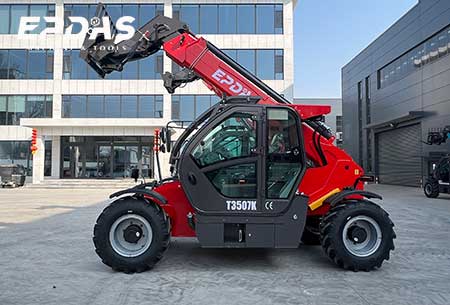
Entering 2026, global infrastructure projects will continue to be implemented, the scale of modern agriculture will continue to improve, and the popularization of intelligent warehousing and logistics will accelerate. Telehandler will become a field of construction, agricultural production, warehousing and transshipment, equipment leasing and other fields with the multi-use characteristics of one machine. Core engineering machinery that may or may be lacking.
Against the background of the surge in market demand, the telescopic boom forklift industry will usher in a comprehensive upgrade in 2026. The proportion of electrified models continues to rise, intelligent safety systems have become the mainstream configuration, and the segmentation of models is more refined. The product models, configurations and price spans in the market are extremely large. For construction companies, agricultural enterprises, warehousing and logistics parks, engineering equipment leasing companies and other B2B enterprises, telescopic forklifts are large fixed asset investments. Whether the equipment selection is reasonable directly affects the efficiency of on-site operations, construction safety, equipment service life and return on investment.
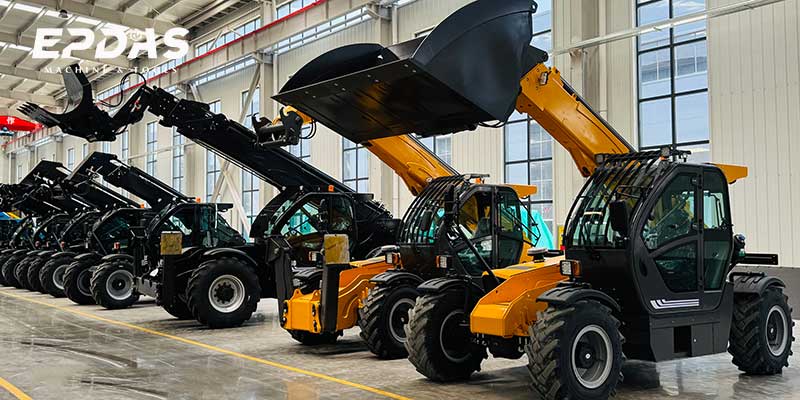
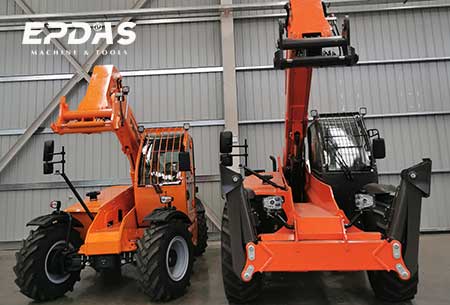
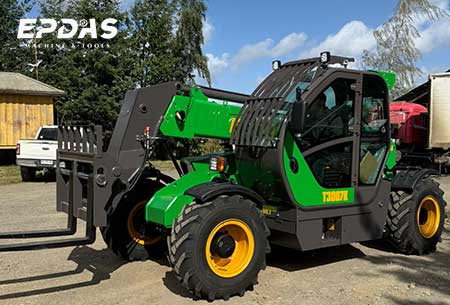
The telescopic boom forklift is a kind of multi-functional wheeled engineering machinery. Its core structure includes four modules: tilting, multi-level retractable high-strength arm frame, load-bearing off-road chassis, hydraulic quick-change fitting interface, and intelligent control system. With flexible arm movement and diversified belongings, it can be quickly switched to a variety of equipment such as forklifts, cranes, aerial work platforms, material grabbers, etc., and can be adapted to indoor, outdoor, hardened road surfaces, non-hardened road surfaces and other full-scene operations. It is also one of the fastest growing categories in the field of construction machinery in 2026.
The main parts of the telescopic boom forklift include: multi-section telescopic boom, which can be stretched through hydraulic cylinders; hydraulic systems, including pumps, cylinders, pipelines and valves, to provide power for lifting, stretching and steering; the cab, which is equipped with operating handles, instruments and comfortable seats; chassis and chassis systems, including bearing Heavy frame, four-wheel drive transmission and large tires; as well as counterweights and stabilization systems, usually equipped with balanced counterweights at the rear of the car, and some models also have legs or stabilized hydraulic systems to enhance the stability during operation.
If you want to select models scientifically, you must first complete the classification and cognition of the model. Combined with the general standards of the industry, the layout of new products in 2026 and the product division system of major manufacturers, this article classifies mainstream models from the three core dimensions of operating arm length and lifting height, rated carrying tonnage, and applicable operating environment. At the same time, it clarifies the advantages and disadvantages of each type of model, adapts to the industry and typical operation scenarios. , to help the purchasing staff quickly lock in the preliminary selection range.
This type of model is a lightweight product developed for narrow operating space. The width of the whole vehicle is generally controlled within 2.2 meters, the minimum turning radius does not exceed 3.5 meters, and the fuselage is compact and flexible. The power system is divided into two major versions: lithium-electric pure electric and low-emission diesel. The electric model has zero emissions, low noise and no exhaust pollution, which is suitable for urban indoor and outdoor combined scenarios.
This is the main general model with the highest market holdings and the widest audience at present, and it is also the core product promoted by major manufacturers in 2026. The boom frame is forged with high-strength alloy steel to reduce its own weight while ensuring the strength of the structure, and the pitching and expansion movements are smooth and smooth. This height range perfectly matches more than 80% of the routine operation needs of civil buildings, medium-sized farms and large storage centers, and is also a standard model for equipment leasing enterprises.
The ultra-high boom model is positioned in the high-end heavy-load aerial work market. It adopts a multi-section synchronous telescopic boom structure and is equipped with an electro-hydraulic proportional control valve and a boom vibration damping system. The new model in 2026 focuses on upgrading the stability of the boom frame. At the maximum lifting height, the shaking amplitude of the end of the boom frame is reduced by 40% compared with the old model, which greatly improves the safety and accuracy of high-altitude operation.
The standard load center distance is 500mm, the weight of the whole vehicle is light, the grounding pressure is small, and the requirements for the ground bearing capacity are low. The power is mainly pure electric, focusing on lightweight, high-frequency and light-load operations. It is mainly used in e-commerce warehousing, small agricultural warehouses, and light material transshipment scenarios. The purchase price is low, the fuel consumption/power consumption is low, the daily maintenance is simple, and the operation and maintenance cost is at the lowest level of all models. The disadvantage is that the structural strength is limited, and heavy load, cross-country and long-term continuous operation are not allowed.
The industry’s “golden tonnage”, with a load center distance of 600mm, takes into account the load capacity, fuselage flexibility, structural strength and permeability. It is also the mainstream tonnage of general-purpose medium-long arm models. The accessories of this tonnage model are universal, with comprehensive coverage of offline after-sales outlets, and a high residual value rate of second-hand equipment. The routine operations of the vast majority of industries such as construction, agriculture, municipal construction and leasing can be completed by 3.5-5-ton models, which is the tonnage range with the best comprehensive reputation in the market.
The load center distance is increased to 1200mm, and it is equipped with a reinforced boom frame, heavy-load axle, and a large-flow hydraulic system. The overall structure has been strengthened and designed to withstand heavy-duty impact for a long time. It is mainly used for the lifting of large-scale precast concrete components, heavy steel, large-scale engineering equipment and other heavy objects, and is suitable for large-scale infrastructure, heavy industrial plant areas, ports and other heavy-load scenarios. This type of model has high procurement cost, large fuel consumption, bulky fuselage, and poor site flexibility. It is only aimed at enterprises with special heavy load needs.
It adopts two-wheel drive, solid traceless tires, no off-road pattern, to protect the indoor floor; the power gives priority to lithium electric drive, which fully meets the environmental protection and noise reduction requirements of the closed warehouse; the height of the whole vehicle is low, adapting to the warehouse doorway and indoor height limit rules. The chassis has been optimized and the center of gravity is low to improve the stability of stacking operations. It is only suitable for flat and hardened indoor sites, and it is forbidden to use it on muddy and potholed roads.
Equipped with a timely four-wheel drive system and semi-off-road patterned pneumatic tires, with a large tread width and uniform grounding pressure, a telehandler can pass normally on gravel roads and lightly muddy construction sites. The engine is diesel-powered and powerful.
The rated load load refers to the maximum cargo weight that the equipment can safely take off under the ideal working conditions of the standard load center distance, the boom frame is completely retracted vertically, and the vehicle is parked on a horizontal hardened ground. This is the theoretical maximum value, which cannot be directly equivalent to the actual operation load. When selecting the model, it is necessary to increase the safety redundancy by 20% on the basis of the maximum daily cargo weight, and at the same time take into account the self-weight of the belongings and slings to avoid long-term overloaded operation of the equipment.
The maximum lifting height is defined as the vertical height above the surface of the fork when the boom is lifted vertically to the highest point. There are problems such as material lifting, obstacle cover, operation error and so on-site operation. It is recommended to reserve 10%-15% of the margin based on the actual demand height. For example, if the operation requires a lifting height of 12 meters, you need to choose a model with a maximum lifting height of ≥13.5 meters. It is forbidden to operate at extreme heights for a long time.
The maximum forward extension distance refers to the horizontal distance from the front end of the fork to the center of rotation of the vehicle body after the arm frame is completely extended forward horizontally. It is the core parameter of pit edge lifting, exterior wall operation, and cross-obstacle transfer. The longer the forward extension distance, the greater the overturning torque of the equipment, and the more obvious the load attenuation. Take a 5-ton medium-sized model as an example, when the boom is stretched forward by 2 meters, the actual load capacity is about 4.8 tons; when it is stretched forward to 5 meters, the actual load capacity is only 2.1 tons, and the attenuation is more than 50%.
Count the daily conventional cargo weight, the maximum cargo weight of a single operation, the external dimensions of the goods, and the load center distance; count the commonly used belonging types and self-weight, and include the weight of the belongings in the total load calculation.
Distinguish between indoor and outdoor operations and record the type of road surface (hardened, gravel, muddy, soft soil); measure the width of the channel, the height of the doorway, the slope of the site, and the maximum forward distance of the operation area; mark the position of high-voltage lines, deep pits, walls and other obstacles.
Count the average daily operation time, the number of monthly operation days, and the total number of annual operation hours, and divide it into three types of working conditions: high frequency (average ≥4 hours per day), medium frequency (average 1-4 hours per day), and low frequency (average <1 hour per day); clarify whether the operation time is all-weather operation.
In combination with the enterprise’s 1-3-year business expansion plan, predict whether the operation height, load and site will change, and appropriately reserve parameter redundancy to avoid equipment being eliminated in the short term.
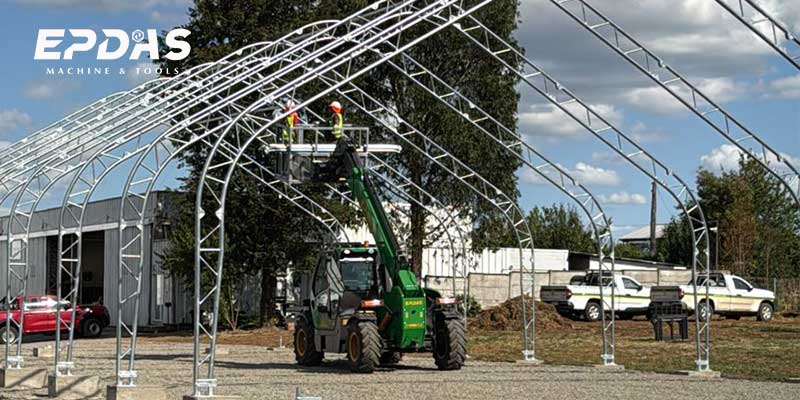
Construction is the largest application market for telescopic boom forklifts. The scene subdivision is clear: civil construction sites transfer red bricks, templates, cement and other conventional building materials, and give priority to 9-16 meters medium-long arms, 3.5-5 tons of medium-sized general-purpose models, timely four-wheel drive + semi-off-road tires, suitable for gravel and light muddy construction sites; ultra-high-rise construction Construction, large-scale venue steel structure lifting, choose an ultra-high arm of more than 17 meters, a 6-12-ton heavy-duty model, equipped with a boom vibration damping system and a stabilization device as standard; interior decoration, low-rise building internal operation, choose 6-8-meter short-arm electric models, traceless tires to protect the indoor floor.
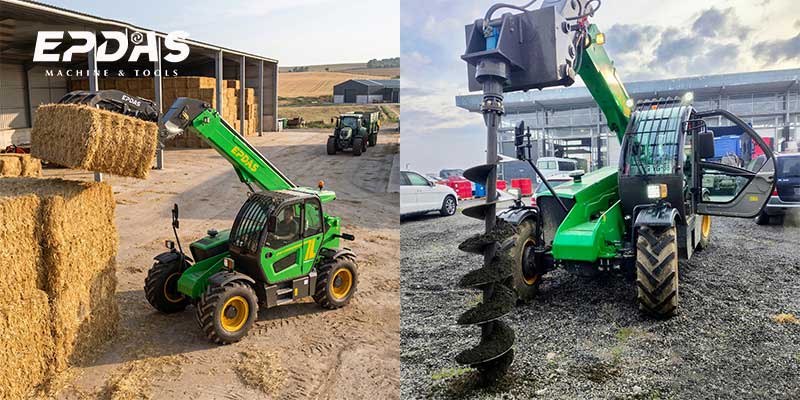
The farm site is mainly made of soft soil and field roads, and off-road special models must be selected. The mainstream selection is 9-12 meters medium-long arm, 3-3.5-ton telehandler for farm load-duty models, full-time four-wheel drive, large-patterned off-road tires, and high ground clearance are the basic configuration. According to the content of the work, choose the accessories: straw and forage stacking with forage grabs, grain transshipment with shovels, log handling with round forks. Farm operations are mostly daytime intermediate frequency operations, and the endurance advantage of diesel models is more obvious.
The core requirements are narrow channels, high shelves, zero pollution and low noise. Priority is given to 6-8-meter short-arm compact pure electric models. Solid traceless tires and small turning radius are rigid requirements. The compact telehandler for warehouse lifting height is matched according to the height of the shelf. The regular shelf is 6-8 meters, and the high shelf is 8 meters. The whole process of indoor operation does not require four-wheel drive and off-road tires, which reduces the procurement cost.
Suitable for enterprises with an average daily operation of ≥4 hours, annual use of ≥200 days, and long-term self-use, such as large-scale construction companies, large-scale farms, and large-scale warehousing centers. Market price reference in 2026: short-arm electric models are 30,000-50,000 US dollars, medium-long-arm general-purpose models are 60,000-100,000 US dollars, and ultra-high-arm heavy-duty models are 120,000-200,000 US dollars. The advantages of the new machine are low failure rate, perfect quality assurance, high operation efficiency, and can be customized according to demand. It is recommended to only choose rigid safety configuration and commonly used belongings, abandon the flashy intelligent configuration, and control the procurement cost.
Suitable for groups with an average daily operation of <1 hour, short-term projects, small construction teams with limited budgets, and small farms. The risk of second-hand mobile phone procurement is relatively high. In 2026, the second-hand equipment in the industry is mixed. The machine inspection must focus on checking: the number of working hours of the equipment (preferably within 2000 hours), whether the boom weld is cracked, whether the hydraulic system is leaking oil, and the degree of tire wear; the seller is required to provide the original factory maintenance records and safety inspection. Report, whole machine qualification certificate, on-site inspection by professional engineers to eliminate accident machines, refurbished machines and assembly machines. The price of the second mobile phone is only 40%-60% of that of the new one, but the later repair cost is high.
In 2026, all mainstream telescopic arm forklifts are equipped with hydraulic quick-change joints as standard, which can complete the switching of accessories within 5 minutes without tools, truly realizing the multi-use of one machine. The optional equipment follows the principle of “core operation-oriented and supplemented on demand”, and does not blindly purchase a full set of belongings.
The standard equipment is a standard forged fork, which meets more than 90% of conventional cargo loading and unloading and stacking operations, and is a must for all enterprises. Scenario-based optional belongings, construction enterprises choose to be equipped with lifting hooks, prefabricated component slings, and aerial work platforms; agricultural enterprises can choose to be equipped with grass grabs, roundwood forks, and grain buckets; warehousing enterprises can choose to be equipped with distanced freight forks to adapt to different specifications of pallets; municipal projects can be equipped with sweepers and crushing hammers to expand the capacity of municipal maintenance operations.
Safety configuration is the bottom line. Intelligent configuration is selected on demand. With the upgrade of industry safety standards in 2026, some security devices have become mandatory standard. The load overload protection system is equipped with dynamic load display, overload automatic power-off alarm, which is required to be carried by North American ANSI, European Union CE and domestic GB standards; Second, the arm frame angle sensor and body level meter can monitor the arm frame pitch angle and chassis inclination in real time to prevent dangerous posture operation; the first Third, panoramic reversing image + sound and light alarm, eliminate the blind area of the body and protect the safety of on-site personnel.
| Brand name | Main advantages and characteristics |
| JCB | The world’s first company to mass-produce telescopic arm forklifts has a perfect product line. With leading technology, complete supporting expansion equipment and a strong global service network, it is regarded as the best-selling brand in the industry. The products cover agricultural to heavy-duty.
|
| Manitou | One of the world’s leading brands focusing on material handling equipment. It covers forklifts, telescopic boom forklifts and aerial work platforms, with a variety of products. Good at off-road and rotary arm models, and the layout of electric products is positive.
|
| Merlo | One of the world’s leading brands focusing on material handling equipment. It covers forklifts, telescopic boom forklifts and aerial work platforms, with a variety of products. Good at off-road and rotary arm models, and the layout of electric products is positive. |
| Genius | Originally a Terex brand, it specializes in the production of high-quality aerial work machinery and telescopic forklifts. It is famous for innovation, and most of the products are blue logos. The core advantage is that it is lightweight and easy to use, and has a wide range of after-sales outlets, which is convenient for global leasing operators to purchase. |
| JLG | A well-known crane equipment manufacturer, the product line of telescopic boom forklifts is complete, taking into account the needs of construction and industry. With heavy-duty models and safety technology, it provides a variety of all-terrain models. JLG is a brand of Oshkosh, which leads the market share in North America. |
| Bobcat | Bobcat is a brand of Dois Boco Group, which is famous for its compact and medium-sized models. The equipment is highly compatible and suitable for agriculture, lightweight construction and leasing. Doosan Group has engine technical support and sufficient supply of parts. |
| Caterpillar | As a world-famous engineering machinery brand, the telescopic boom forklift has CAT engine and reliability, which is suitable for extreme environments. The service network is perfect, but the price is high. It is usually used in heavy industry and mining. |
| Dieci | The Italian professional brand produces wheeled and crawler forklifts of a variety of tonnages, which is famous for its high stability and flexible chassis. The products cover the fields of agriculture and construction, especially in the European market. |
| Halotte | A French lifting equipment manufacturer, which also produces telescopic boom forklifts and aerial work platforms. The product line is diverse, and small models have a high market share in the rental market. I am good at compact design, and some models are competitive in price. |
| EPDAS | A global telehandler manufacturer with a 20-year history. The products cover a series of 3–18 meters high, 3–5 tons of load, etc. It has a sales network in 168 countries around the world, which is cost-effective and provides a full range of localization services. |
Should enterprises buy a special model or a multi-function telescopic forklift?
If the enterprise operation scenario is single, such as only for warehouse stacking and farm straw transshipment, you can choose a special model, and the purchase price, fuel consumption and maintenance cost will be lower; if the enterprise operation scenario is complex and requires frequent switching of construction sites, warehouses, farmland and other sites, you must choose a multi-functional general model with quick replacement accessories. Realizing one machine for multiple uses, the comprehensive cost performance is much higher than purchasing multiple special equipment. In 2026, the technological maturity of multi-function models will be further improved, and it is the mainstream choice for multi-scenario enterprises.
How to avoid budget waste when choosing a large or small tonnage?
Follow the principle of “actual total load + 20% safety redundancy”, do not blindly choose large tonnage, and do not get stuck at the limit load. The purchase price of large-tonnage models is 15%-30% higher, the fuel/power consumption is 20%-40% high, and the fuselage is bulky and the flexibility is poor; if the tonnage is small, the equipment will be overloaded for a long time, and there will be frequent failures and there is a risk of overturning. Be sure to account for dynamic load in combination with the load performance table, instead of just looking at the static rated load.
How to distinguish between off-road models and ordinary models?
The core judgment criterion is the road surface conditions of the operation site. If the work site is farmland, muddy construction site, mountain, and non-hardened road surface, you must choose the full-time four-wheel drive off-road model; if the operation site is an indoor warehouse, level the factory area, and the hardened construction site, you can choose the two-wheel drive ordinary model. The ordinary model has a lower purchase cost and less energy consumption, which fully meets the needs of leveling the site, and there is no need to pay extra for the off-road function.
What industry standards need to be followed to buy telescopic forklifts in 2026?
Different regions implement mandatory safety standards, and manufacturers must be required to provide corresponding test reports when purchasing: the North American market implements the ANSI B56.6-2026 standard and requires a load limitation system; the European Union market implements the CE EN1459-2026 standard to strictly restrict exhaust emissions. Release and safety protection; the domestic market implements GB/T 10454-2023 and GB 5144-2022 standards, requiring standard overload protection and emergency descent devices. Equipment that does not meet local standards cannot pass the security check and is prohibited from being put into use.
As a large fixed asset, the selection quality of telescopic forklifts is directly related to operation efficiency, production safety and return on investment. Only by abandoning the loose procurement thinking of “only looking at the price and only looking at the publicity parameters” and adopting the scientific selection idea of scenario-based, data-based and full-cycle, can the equipment truly serve the development of the enterprise and achieve the core goal of reducing costs and increasing efficiency.